Radon Testing for Water in Richmond & Central Virginia
RVA Radon offers full-service radon testing, including water testing, which is strongly recommended for structures with well water or other groundwater exposure.

How Radon Gets Into Water
Radon is a naturally occurring radioactive gas that forms underground. As groundwater moves through soil and rock, radon can contaminate the water supply.
Homes that use private wells are more likely to have radon in their water, as municipal water systems typically aerate or treat water before distribution.
When radon-containing water is used for showering, cooking, laundry, or dishwashing, radon gas can be released into the air inside the home, increasing your risk of health concerns.
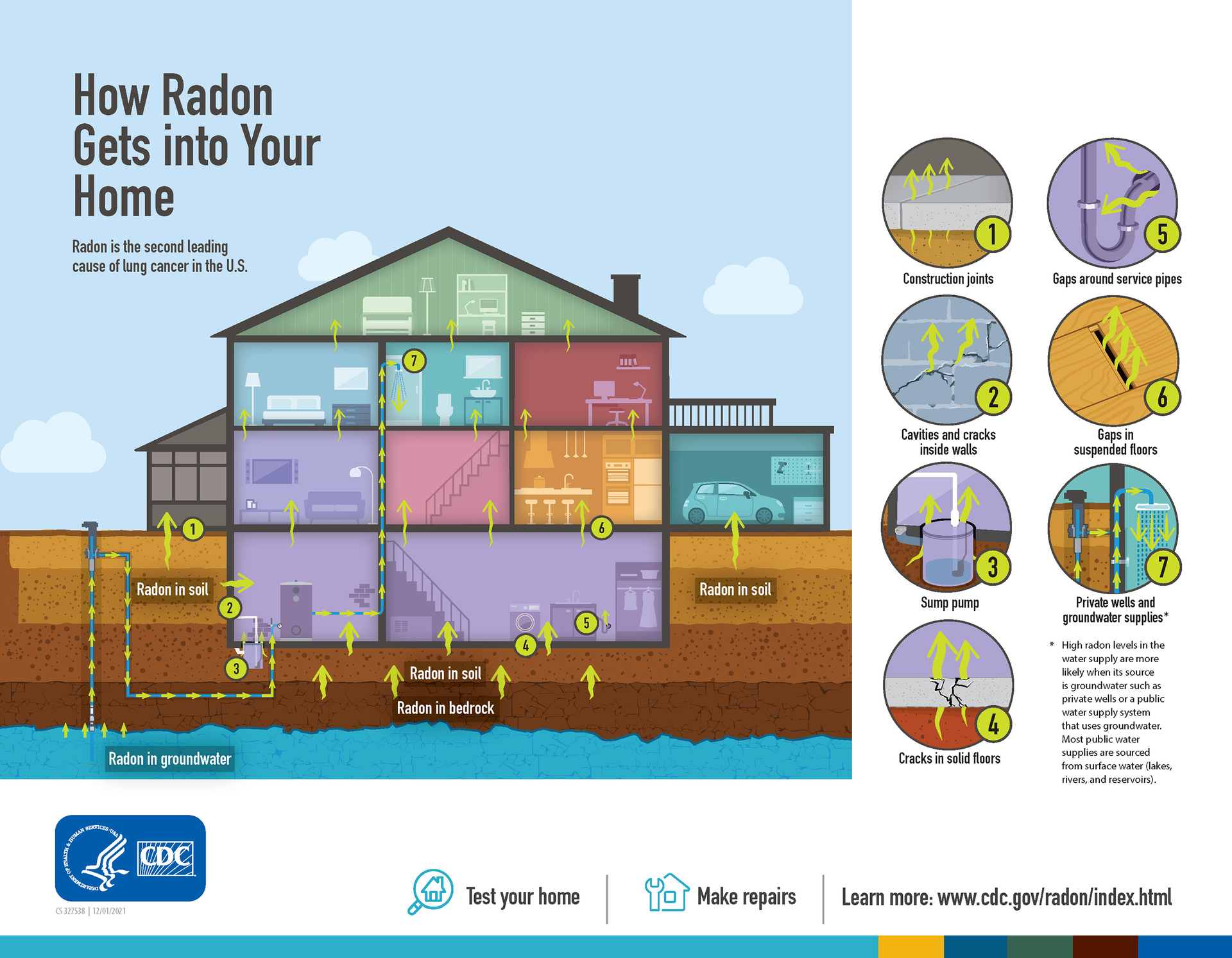
The EPA cites that elevated levels of radon in drinking water contribute to various cancer cases each year, including lung and stomach cancer.
When To Test for Radon in Water
While the primary exposure to radon comes from indoor air, radon may also escape from water when washing hands, showering, washing dishes, etc.
Any residence or building that uses a private well should be tested. However, most public water systems have limited radon exposure, and testing is often not required.
Testing may be appropriate if you have public water and your structure has elevated radon levels or distinct changes to your water.
If you have experienced these issues or have other concerns about your water, please contact us to discuss your situation and if testing is necessary.
You should test for radon in your water supply if:
- you have well water (or are purchasing a home with well water)
- repairs are made to your well
- the soil has been disrupted near your well (construction, flooding, etc.)
- your indoor air levels of radon are 4 pCi/L or higher
- you notice any visible changes to your water (color, smell, taste, etc.)
For more information, you may also view the EPA’s guidelines for testing radon in water. Contact our office to learn more about radon testing for water.
How Water Radon Testing Works
01
Schedule Testing
Call or text us at (804) 385-2233 to schedule your water radon testing.
02
Sample Collection
Water samples are collected using appropriate procedures to ensure accuracy.
03
Analysis
Samples are analyzed to determine radon concentration in the water.
04
Detailed Report
You will receive a detailed report that clearly explains the radon levels in your water and any actionable recommendations.
05
Mitigation Support
If mitigation is necessary, we will guide you through the process and retest to confirm reduced levels.
Benefits of Water
Radon Testing
Accurate measurement using proper testing procedures.
Better understanding of total radon exposure.
IInformed decisions about air and water mitigation.
Peace of mind for families and pets.
Radon Mitigation Services
for Water Testing
If water radon testing indicates elevated levels, treatment or mitigation options may be recommended. In some cases, reducing radon in the water supply may also help lower indoor air radon levels.
RVA Radon provides guidance and referrals to qualified professionals and can coordinate follow-up testing when needed. We remain focused on testing, education, and verification to ensure objective results.
Client Reviews
"Excellent! Could not have had a better experience with RVA Radon and would recommend them to our friends and family. April was very responsive and informative - such a great experience working with her!"
- M.V.
Richmond, VA
"April does her work from the perspective of her passion for the well-being and air safety of the homeowner and family. She is knowledgeable of her subject matter and seeks to educate her clients throughout the set-up process. This lays the foundation for the respect and trust she builds as she carries out her work; you can't help but appreciate her expertise and professionalism."
- Martha
Richmond, VA
FAQs
Can radon be present in drinking water?
Yes. Radon can penetrate groundwater and be present in private well systems.
Do homes on city water need radon water testing?
Most municipal water systems treat or aerate water, reducing radon levels. Water testing is most relevant for private well owners.
How does radon in water affect indoor air?
Radon can be released into the air during everyday water use, contributing to indoor air radon levels.
Should I test water if my radon test for the air in my home is elevated?
If your home uses a private well and air radon levels are elevated, water testing may help identify additional exposure sources.